
Everyday Slow Lessons From Travel in African Landscapes
Last updated on September 28th, 2026 at 08:17 pm
Contents
The African continent, with fifty four countries, depending on its current geo-political climate, is ground zero for slow living with nature.
The true size of the African continent has now been adjusted on the global map. In this era of disclosure, the 1569 Mercator version of the world map is over. How could that vision of the world have lasted so long?
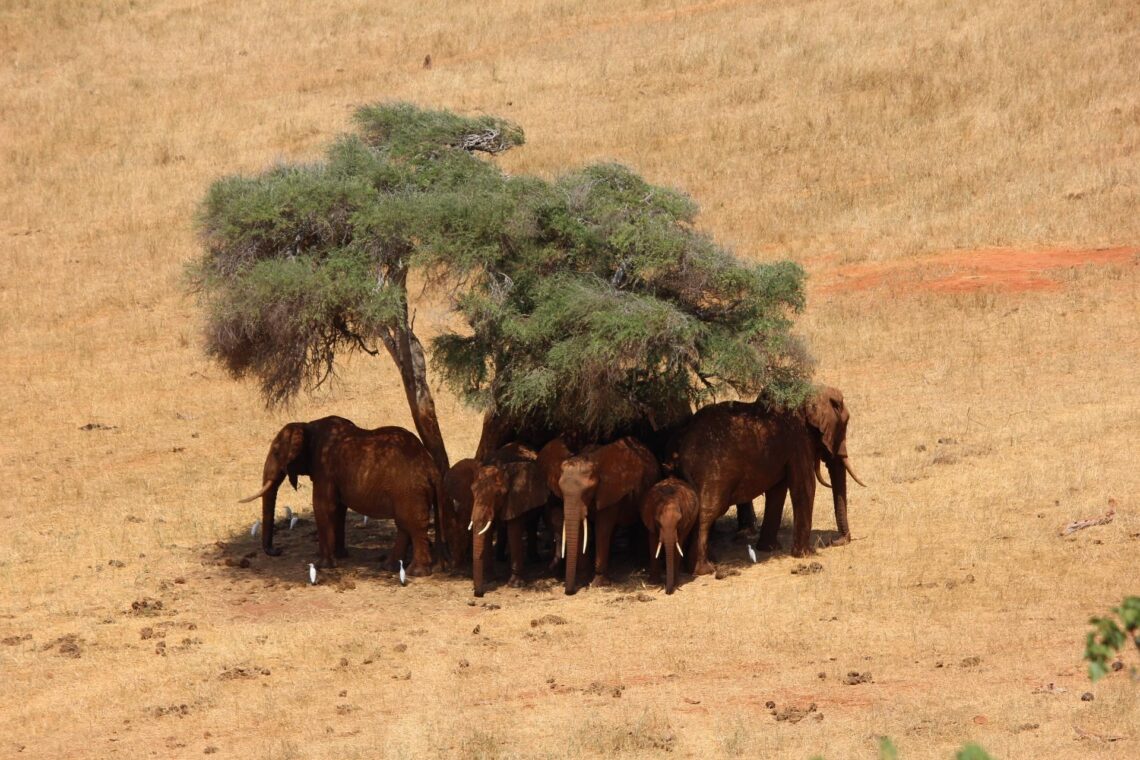
Nothing says slow like a day under the African sun traversing sweeping landscapes. The heat will slow your pace to a graceful stride. I learnt this very quickly during my visit to Tanzania.
Mindful Travel
For those introduced to the continent via National Geographic documentaries, with views of exotic animals and sweeping savannas, Africa is so much more. From pyramids to waterfalls, there is something for everyone willing to embrace its contradictions.
It is a long journey for North Americans and must be carefully planned; however, it is worth it. Navigating the expenses, vaccines, visas and accommodations is part of the intentional travel experience.
What I have noticed about so-called third-world countries is that they always have wealthy enclaves. Just as first world countries have impoverished enclaves which seem less scrutinised as political failure.
Tanzania
I can attest to the alluring beauty of Tanzania and the interesting combination of Swahili culture, brushed with German and British strokes.
Blessed By the Sun
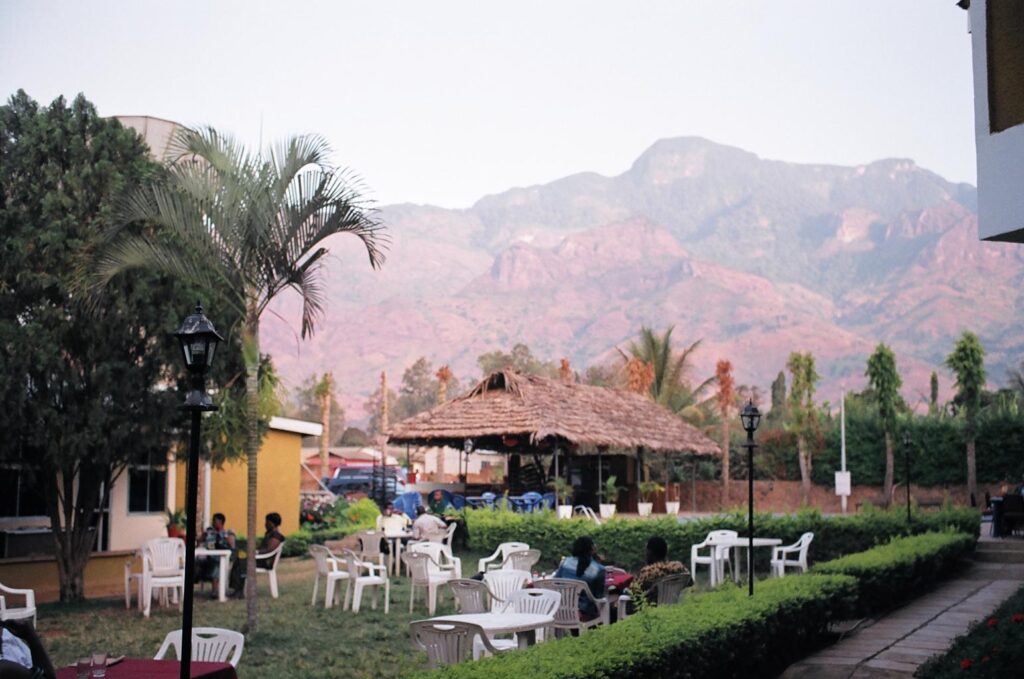
It is hot, extremely hot. This alone will slow you down. Everything is pole, pole. Even the animals know when it is time to take a siesta. When in doubt, do what the locals do. Dress in cotton and choose your times to be outside.
Most of all relax, if there is no emergency, then go with the flow.
Zanzibar
Lulled by the sound of wistful waves and the hypnotising serenity of dhows sailing in the distance as they move swiftly across the bluest of the blue Indian Ocean. You would be forgiven for thinking that you had gone into a trance. The unbearable heat of the midday sun catches only those uninitiated in the siesta ritual of the locals, who take cover in their homes, which provide minimal coolness through the thatched coconut palm roofs.
The lessons you learn travelling through the continent will be yours alone. The gifts of nature will rest in your heart forever. For me, the Mnarani Turtle Conservation Pond in Zanzibar highlighted how managed ecotourism can bring economic benefits and hope for the future.
The Church of Christ is the first Anglican Cathedral built in East Africa. It was built-in Zanzibar in the 1870s, and took ten years to build. It stands on the site of the old slave market. Inside this opulent monument to Christians is an interesting remnant of the darker side of the island’s former trade in humans.
The church was a monument to the end of slavery. The altar of the church is said to have been placed exactly where the whipping post for the slave market used to be. Roman Catholics and Lutherans are Tanzania’s main Christian groups. The church has a very beautiful and unique style of architecture. Definitely a must see when you visit the island.
Ghana
This is a country some of the most poignant lessons still reverberate. A history both dark and celebratory at the same time. Some of the best beaches in Africa are along the Gold coast. The former capital of the Gold Coast Colony, Ghana.
In Elmina, apart from the serene and beautiful palm beaches, the haunting St. George’s Castle, is just a few miles (12 km) west of Cape Coast Castle. This busy fishing village has a vibrancy all of its own. A busy market, and constant motion, in the form of boats and fishermen back with their catch.
A haunting castle of the purest white belies a legacy of mankind’s darkest deeds. Cape Coast Castle, in Ghana, West Africa. A place, that if walls could speak, would tell the tale of kidnapped, stolen and lost souls. The first slave-trading post in sub-sahara, Africa, the Castle was built by the Portuguese.
A Place of Pilgrimage
Captives would be held in cramped, dark cells until the beginning of their journey into slavery through the Door of No Return. A tunnel to the slave ship would ensure the captive would never see daylight until disembarking from the ship, if alive, at the end of the journey. In its heyday in the 18th century, 30,000 slaves per year were exported as chattel to North and South America.
Cape Coast Castle is now a Ghanaian national museum and a World Heritage Monument under UNESCO. There is now a Door of Return, a testament to the descendents of those taken from these shores so long ago. The majority are African-American Tourists, who make the pilgrimage on behalf of the ancestors who could not return.
Many weep and are overcome in the cells, as the poignancy of what the castle represents to their ancestry and as human beings has a profound effect. One of Africa’s ‘Lest We Forget ‘‘ monuments.
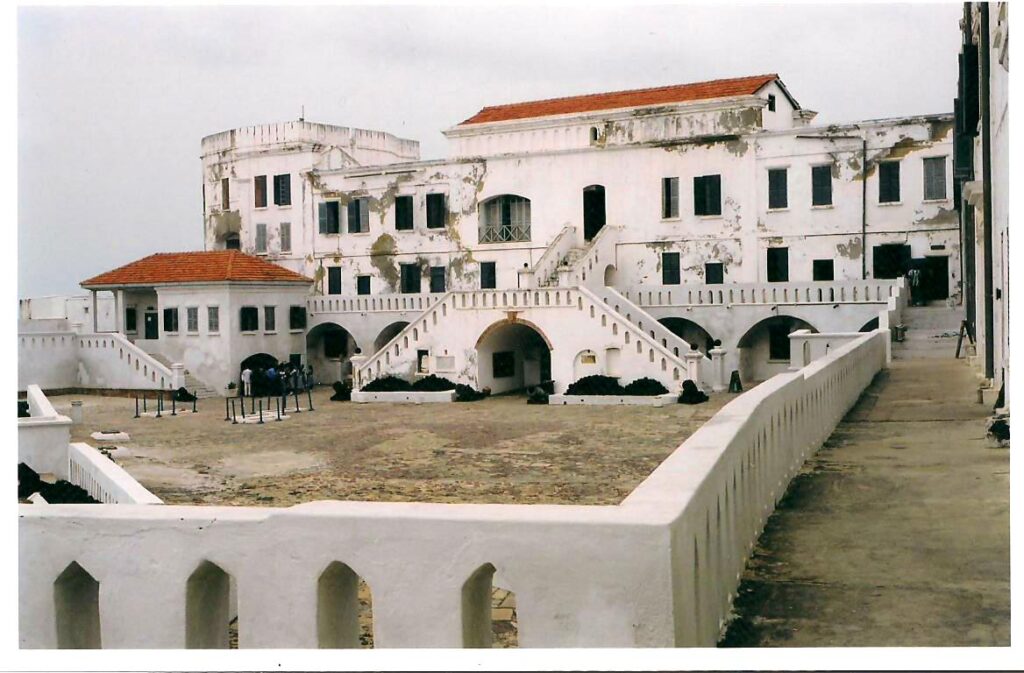
Along the Gulf of Guinea, golden sand stretches for miles along these treasured shores. Ghanaian families mingle with foreign tourists. The buses are packed for Cape Coast Castle, as many descendants of those taken from these shores make a special pilgrimage. Guided tours are available. Don’t forget to visit the museum, where the chronicles of the shameful history are laid bare.
Essential Travel Tips
The most exciting thing about travelling to Africa is being there. The long preparations; the vaccines, it is all worth it once you arrive at your destination. If it is the first time, there is so much to absorb. If it is not, it is like visiting an old friend.
Do your research: Depending on the time of year you are travelling, the climate may not be what you expect. Many African countries have the following seasons: rainy and dry.
Getting there: Airline prices, especially from North America, can vary by thousands of dollars. Check for seat sales, but keep in mind the cheapest price may not be in your best interest. A friend of mine was left stranded in London, England by Ethiopian Air, because they sold the ticket using their winter schedule for connecting flights when the ticket was for summer travel. Complaints and requests for compensation have never been acknowledged. Buying the mid price range ticket seems to be a good rule of thumb. Read reviews. Check stopovers and find your flight comfort level.
Places to stay: Again we recommend research first. However, we have found that licenced taxi drivers at the international airports are able to recommend local hotels based on your preferences, and they will probably get some compensation from the hotel for their recommendation.
In Dar es Salaam, we found the Durban Chain of hotels clean, with friendly staff. They cater to local business people and are in the mid-price range.
Passports: make sure they are up to date and have the required visas or you may find yourself making a contribution to the local customs officers’ retirement fund. Make copies of the passport ID and visa pages, carry these with you on day trips and leave your passport in the safe at the hotel.
Get some local currency before you leave: it is hard to change US currency outside the major cities. Note some countries like Tanzania, will not exchange dollar notes if they are older than a certain year. Check before you leave.
Wear light cotton fabrics: durable and wrinkle free will go a long way. Comfortable walking shoes are recommended as some city streets are uneven.
Check out the local area health warnings: You want to be in the best of health before and after your trip. Tropical diseases are not the souvenirs you want to bring home.
Bring toilet paper: I always pack one roll in a zip lock freezer bag. Carry it with you during the day. There is no escaping, the “slaves revenge” it is going to get you some way, somehow.
Bring a can opener: a small one or a compact camping style. You never know when you will get the munchies, and canned food is a convenient snack when you are back at the hotel.
Pack lightly: Actually, my case is very full arriving as I always bring gently used, laundered clothing to give away, especially children’s clothing. Second hand clothing is a thriving business in many African countries and people are very grateful for clean, donated, used clothing.
Wear a sun hat. Can’t stress enough the importance of protecting your head from the sun, sometimes you don’t realise how hot it is, as you walk around enjoying the attractions.
Bargain. When shopping in markets, negotiate with the vendors. Prices for tourists are immediately inflated, and bargaining is expected.
Be firm but not rude with peddlers and wannabe guides: Several firm refusals are usually enough to let them know that you are not interested. Remember, many are vying for tourist dollars in countries where employment opportunities are scarce.
Be aware of your surroundings. Sometimes while walking and enjoying the sights, you may not realise you have ventured beyond your comfort zone. Keep expensive items such as cameras, close to you, or out of sight. Ladies, bags with zippers or fold over closures are recommended for any major city in the world.
Learn some basic words and phrases. A combination of basic words and sign language are always handy. Take a small pocket dictionary/phase book, in case google translate is not available. There will always be that one word that you can’t translate without one. Local people are usually very helpful when they see that you are trying to use their language.
Take your time and notice the nuances of the culture. This will boost your travel experience and allow more time to interact with the community you are visiting.

