
Scindapsus Pictus Plant Care: The Complete Guide to Growing Silver Pothos
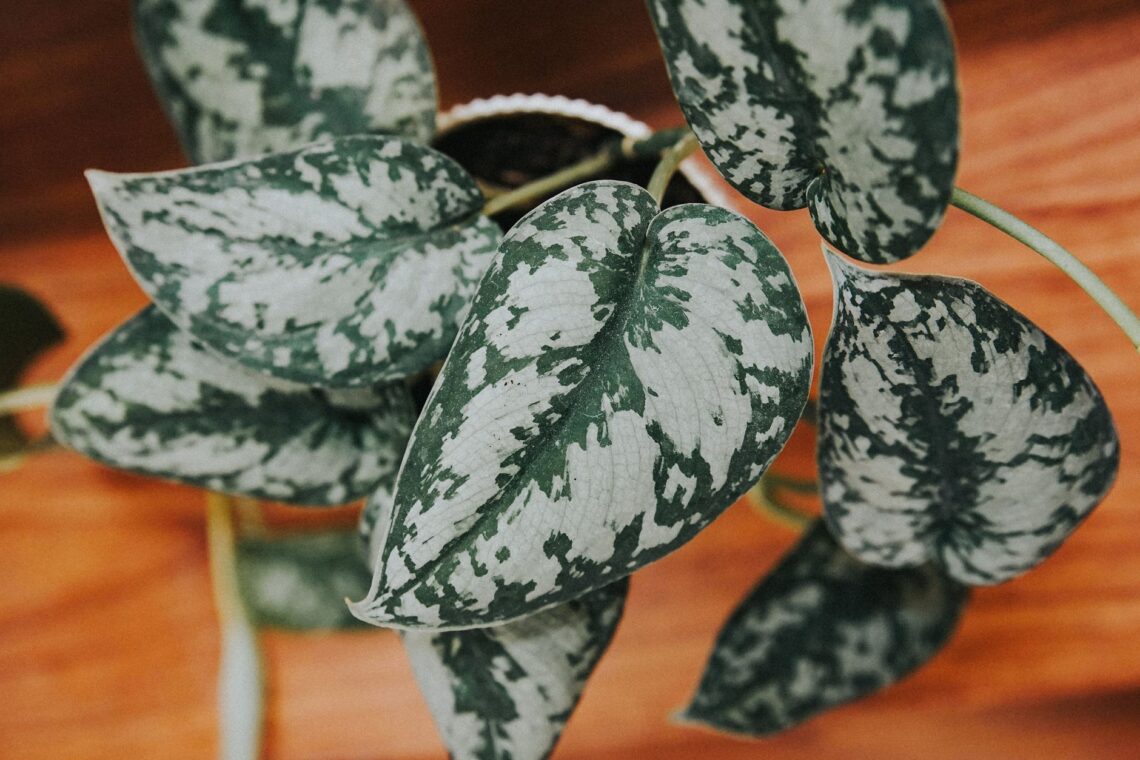
I have been craving a Scindapsus pictus “satin” for a long time, also known as silver pothos, or silver vine. Named for its splashes of silver on the leaves and satin-like appearance, it is one of those “must have” plants in your collection. I will share the best way to care for the Scindapsus pictus.
Contents
Because I am frugal, thrifty and fun, I hoped to get one in an end-of-season sale from a big box store, but I realised that they were so popular that it was not going happen. I purchased a small one as I like to nurture young plants to full maturity. I find this is the best way to learn about their habits.
What is it?
It is a classy vine houseplant. The common names for this plant cause a lot of confusion. It is not a pothos. It is not a philodendron, although they belong to the same genus. The plant is a Scindapsus, plain and simple, and a member of the arid family. The markings look as if they have been painted on, hence the name “pictus”, which means painted.
Once you get your scindapsus satin home and take a break from admiring the silvery leaves, it’s time to prepare it for your living space. As a plant ally, reading the plant is important. Plant neurobiologist, Stefano Manusco says:
“Every living organism exchanges data with its surrounding environment which allows it to survive. Communication is an essential feature of life; without it, even the simplest organisms cannot maintain the very delicate balance that is life itself.” – Stefano Mancuso, The Revolutionary Genius of Plants
Epiphyte
Native to Southeast Asia, it is an epiphyte, which means it climbs up a supporting surface, such as a tree or moss pole for support only and will not harm its host. This process is known as ” shingling” as it is like the way roof shingles are set, and is advantageous way to grow for this type of plant. It absorbs moisture and nutrients from the air.
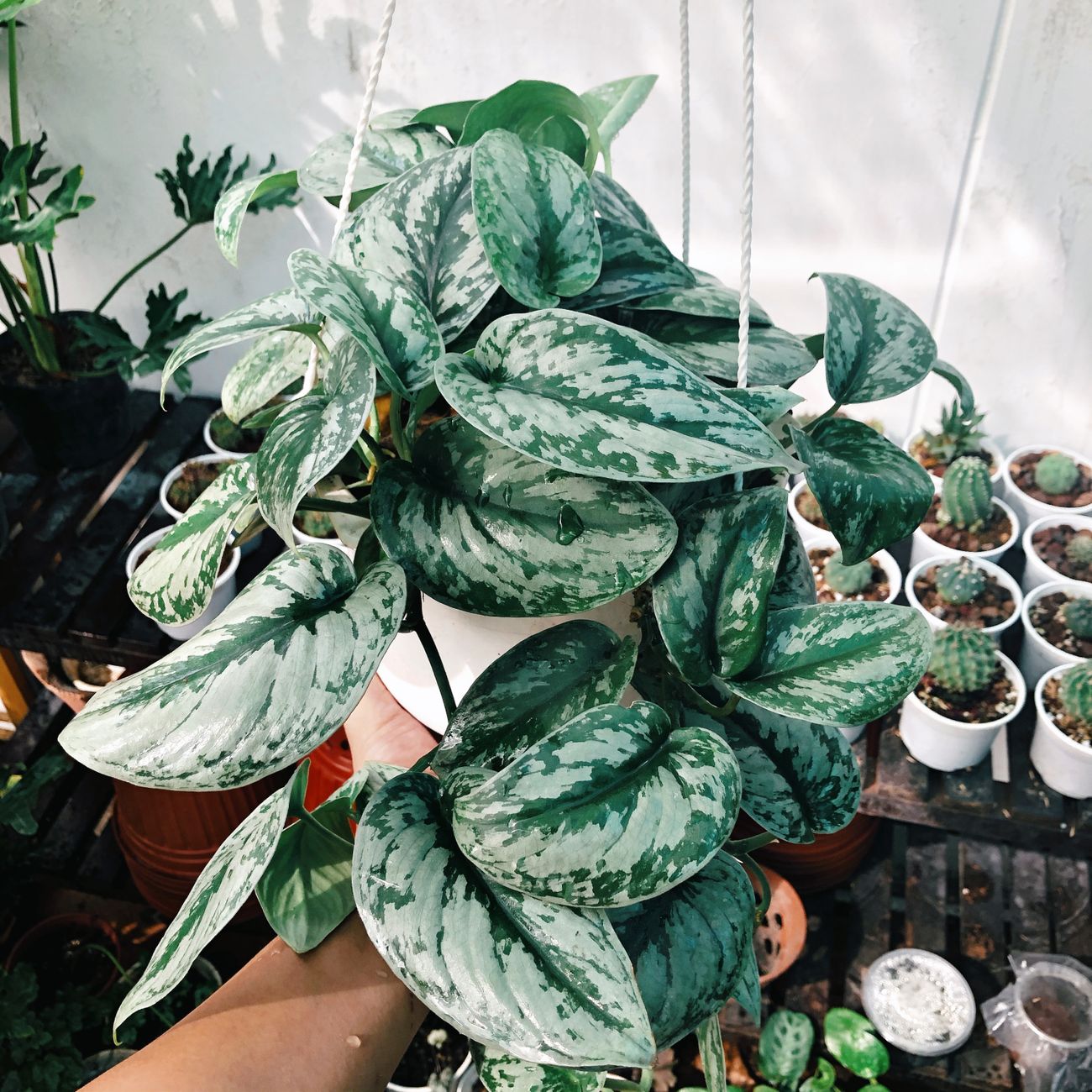
Scindapus likes to climb and will thrive and grow bigger leaves if given a pole or a board. It will remain a smaller version of itself if left as a hanging plant.
There are many cultivars of this plant available, so you can choose the one that appeals to you. Not only is this plant pretty, but it is also considered a bringer of prosperity according to Feng Shui principles, and money and abundance will come your way if it is placed correctly in your house.
Showing the Love
How do you make this plant love you and want to stay in your house? Well, there are a few things which will make your space a home away from home for this plant.
Humidity
Let’s start with the humidity. It originates in tropical rainforests, so it likes humidity, but it can adapt to lower levels in a household setting. It will just grow more slowly.
Soil
The soil you choose will also need to imitate its natural environment. A well-draining orchard bark and perlite or pumice mix is recommended. An aroid mix will allow air to reach the roots. Fertilise with a diluted nitrogen mixture once per month.
Watering
Avoid overwatering, as root rot will set in quickly. Every week and a half to two weeks should give you the best results, or when the first inch of the soil is dry.
Light
Moderate to bright light is preferred for plants that normally shelter under a tropical canopy. I did scorch some leaves on my plant when the evening sunlight managed to peek through the window blinds.
The quick version of the effects of light on this plant to remember: If it gets a lot of light, the leaves will be bigger and the inter nodes smaller. If there is not much light the inter node space will be longer and you will have a leggy plant looking for its next light fix.
Propagation
This is an easy plant to propagate, and you will have lots of root stems in no time. You have to cut a stem just below the root node and put it in a mix of sphagnum moss and perlite. A transparent food container is a good space to propagate your cuttings. Wait until the roots are strong enough, usually about 2 inches, to transfer to your preferred medium.
Repotting
This plant should only need to be repotted once per year. It does not have a large root system, therefore if you see the roots coming out of the bottom, or if it dries really quickly after watering, then it’s time to repot. Upscale to a pot that is not too much bigger so that there will be no issues with the plant becoming water logged.
Final Thoughts
The Scindapsus pictus is a beautiful plant and a calming plant ally in your home. With proper care it will reward you with large mesmerising leaves. If you ever get a flower from this houseplant, you are a miracle worker. Let me know how you did it.
Enjoy and share your Scindapsus plant care routine in the comments below. Happy growing!

