
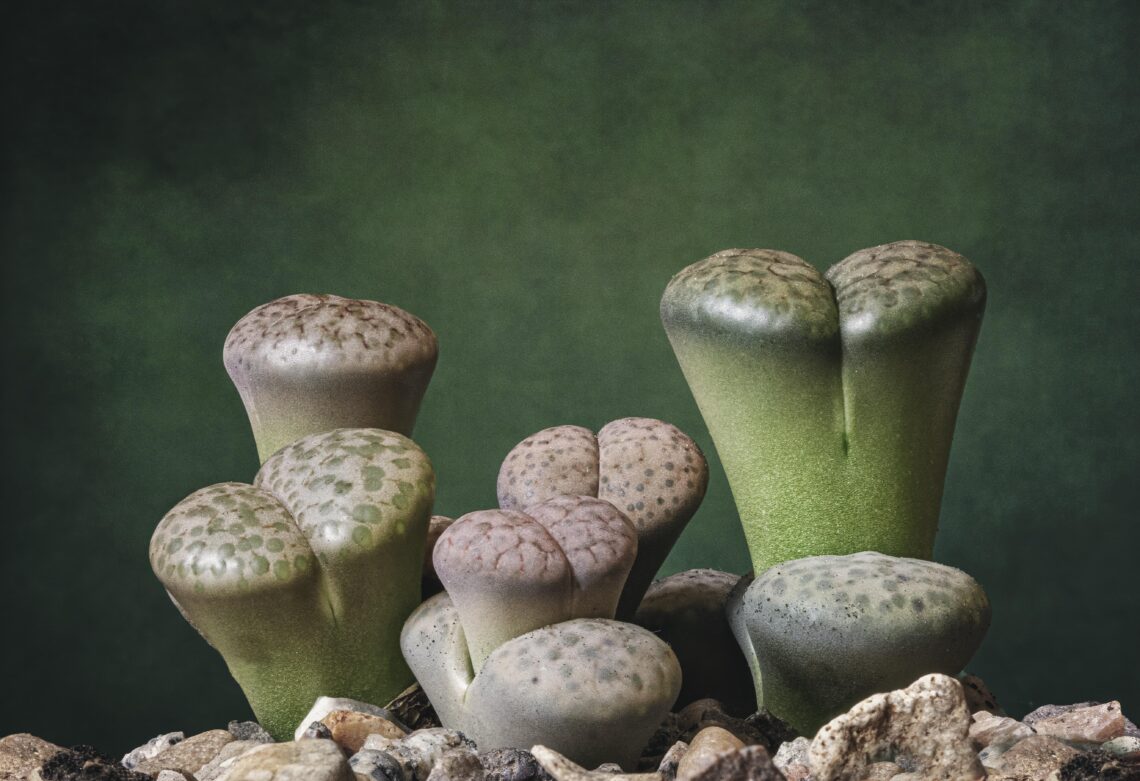
Discover the Fascinating World of Lithops
Contents
When people see lithops for the first time, they are usually taken aback. They are like pebbles on the soil. It is hard to believe that you are looking at living plant. These succulents have evolved to appear like stones in their natural environment.
It is only when they split open in the middle to allow a pretty flower to appear that you realise this is a camouflaged plant. They are also known as living stones or stone face.
Stone Love
I have always wanted one in my collection. I did try years ago to grow some from seeds. Unfortunately, the seeds did germinate, but died soon after. I gave up thinking they would be too exotic or finicky for my environment. However, nothing happens before its time.
These plants are making a comeback via plant stores in North America, and worldwide. Two of the main reasons are their size, they don’t take up much space. There are many varieties and cultivars which allows enthusiasts to cross pollinate to make their own favourites.
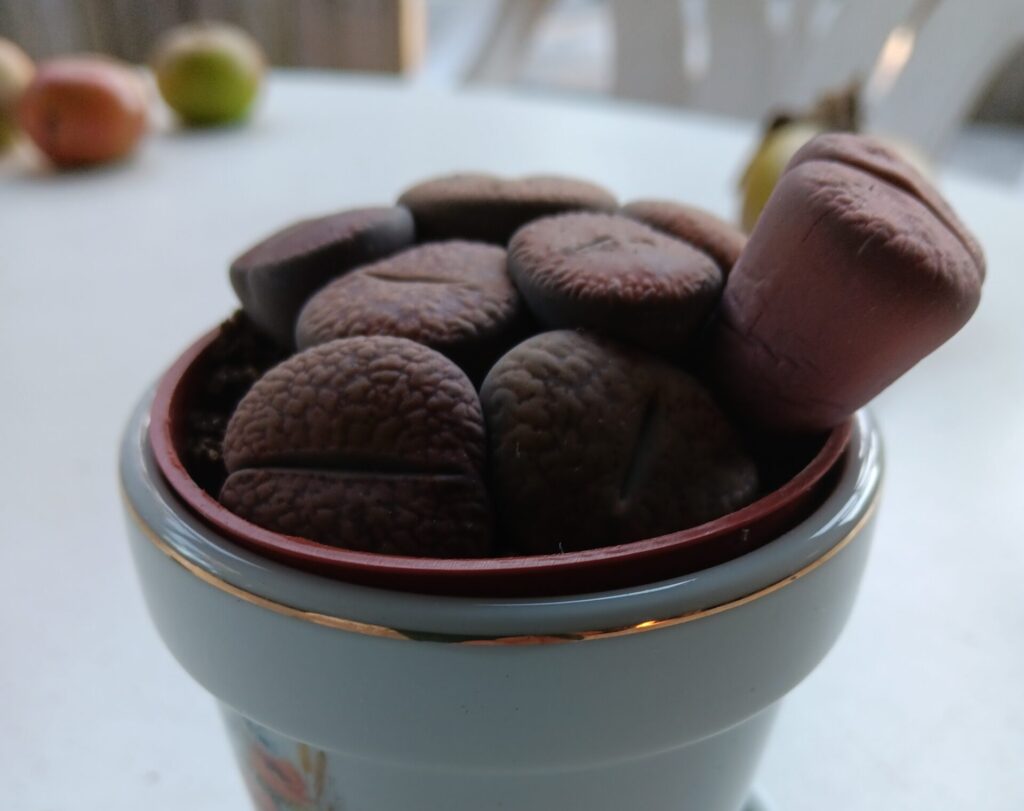
Is it time to try again, and bring some living stones home? Oh, yes it is. There are some amazing varieties out there now. The colours and patterns are so spectacular, you just can’t help yourself.
If you are a slow living enthusiast, this is the plant for you. Lithops are some of the most slow growing plants out there. Every year new leaves, which are like a compressed mini water storage tank, emerge from the top of the plant. Technically the leaves are two independent semi-cylindrical leaves. It looks like someone has made an indentation across the top with a knife.
Gradually, more tops emerge from its outer skin like a phoenix, with fresh new leaves for your enjoyment. Their surface is often translucent with interesting patterns that have became the focus for breeders like Yasuhiko Shimada.
It is one thing to buy a beautiful specimen, but quite another to make it last in your home environment, which may be quite different from its natural one.
History
One of the oldest communities on the planet, the San (Khoisan) people of South Africa, and Nambia, have observed this genus of plants for thousands of years during their hunting and gathering expeditions, long before it was introduced to Europe by William Burchell following his 1811 botanical expedition to South Africa.
As a former hunter gather community, the Khoisan thought lithops looked like the tracks of horses hooves, and their name for them reflects that. Later European, settlers called them various names alluding to the split in the middle and the round sides.
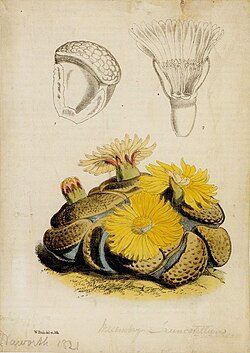
Lithops belong to the genus (Mesembryanthemum truncatellum), they grow as a single plant or in colonies.
Growing Season
The secret to happy lithops, and most plants, is mimicking their natural environment. They originate in a two season environment. Dry winter, wet summer. Now you know the secret, so make it work wherever you are in the world.
Light
They love light, so give them at least five to six hours of sun per day, but don’t let them get burnt. They will need more hours if you are using grow lights. If they start stretching, like one of mine did as you can see in my photo, it means they are not getting enough light. They flourish in zones 9-11.
Soil
If your roots were in the arid corners of Namibia and South Africa, think of the kind of soil would need tobe comfortable in to thrive. Lithops need a course, loose, well draining mix.
Growers recommend a mix of pumice, sand, and even decomposed granite. I made my own with cactus soil, sand and perlite. Make sure organic matter like pieces of bark are removed as this can cause rot if it touches the tap root of the plant.
These plant babies make themselves snug as a bug in rug in their natural environment. Most of the plant lies below the surface, which allows them to benefit from the geothermal energy of the earth. That slit in the middle of the plant, is a clever adaptation for absorbing light through specific cells.
Watering
The incorrect watering of lithops is the most common cause of their demise. It is not easy for North Americans to look at our little pebble plants, and not want to reach for the watering can. This is especially true when they shed their outer leaves. This happens in the spring when the old leaves start drying up.
There are several reasons for why lithops start to shrivel. Don’t panic and water the plant because it is drawing water from the old leaves. The plants may also be going dormant and settling down for the season. Keep observing and you will notice your plants individual needs.
Once the intake of nutrients from the old leaves has finished then you can start watering again. This is much like bulbs, which store the energy from the dying leaves of the season.
Watch your plant, and feel the leaves which retain water. Water around every 3 weeks in the season, but check the soil first as this will vary according to your soil mix, and type of pot. I use a various methods check my soil.
Flowering
A lithop plant has to be at least 3 to five years old before it flowers, and even then it will not flower every year. It depends on its maturity and the environmental conditions. Like most succulents, they can thrive outside only in the summer in four season climates. The blooms are beautiful and an added bonus to the stone like base. I have seen white and yellows flowers so far.
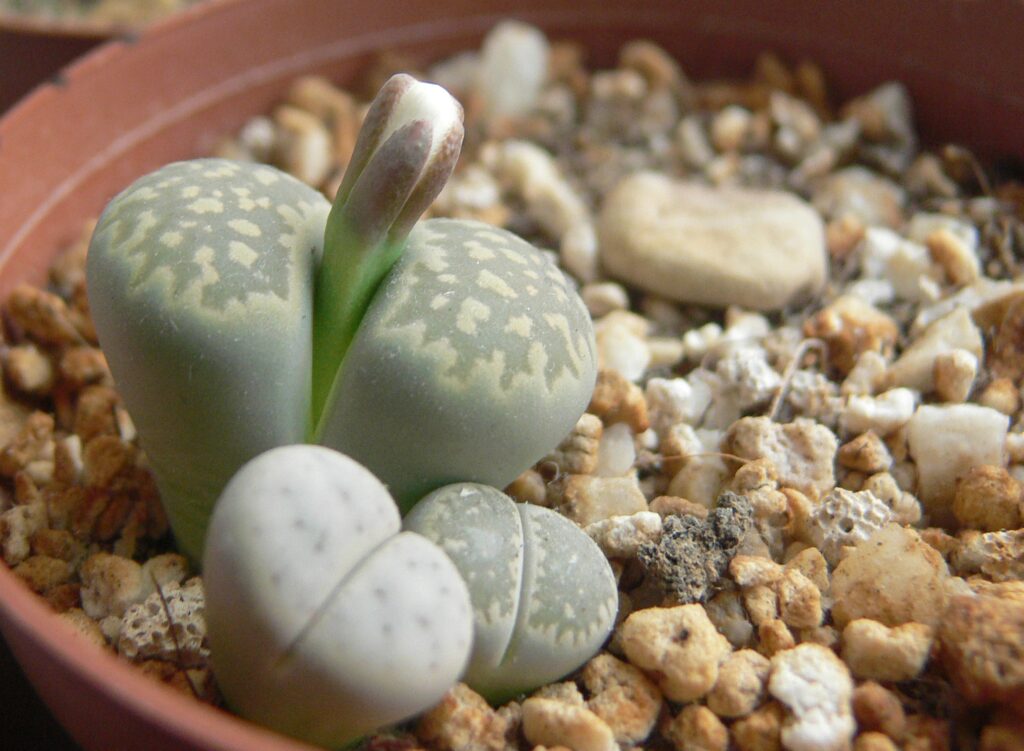
If you want viable seeds, try cross-pollinating yourself with a small brush. The seeds have evolved to remain inside their capsules and will only germinate when water is available.
Final Thoughts
Lithops are amazing to look at and provide us with so many lessons about adaptation and life. These plants, with the right care, can remain in the same pot for 10-20 years. They are a no fuss plant, with a longevity that we can enjoy for years to come.
They make great conversation starters and wonderful gifts as seeds or whole plants. Young growers will find them as fascinating to grow as their grandparents found sea monkeys ( If you know, you know).

