Understanding the Day of the Dead: A Cultural Celebration
Contents
The world has become a smaller place as cultures blend through contact and technology. Traditional celebrations, once specific to a geographical location, have travelled far from their country of origin. The Mexican celebration of Day of the Dead is one such celebration, which takes place from October 31st. to November 2nd. each year.
My introduction to the details of the Day of the Dead which incorporates nature based elements comes though world of curanderismo. The core meaning of the each element opens a deeper understanding of indigenous traditional practises.
What is the Day of the Dead
From research and conservation with celebrants, the day of the dead is a way for the living to recover from and find peace within themselves over the loss of a loved one, or family member. It facilitates morning, grief, and is a way to work through unresolved issues, with people no longer on this side of life.
How it Benefits Modern Times
There are many benefits to making time once per year to honour the dead, and receive our ancestors, and friends who have passed from this life.
The world still has the memory of a global pandemic, where so many lives were lost. In addition, there appears to be an increase in diseases that modern technology has been unable to suppress. There are wars and rumours of war.
And some governments, including the one in the country where I live, participate in a form of eugenics called assisted suicide, which allows people to choose a time, based on certain criteria, to have a medical professional end their time on this planet.
The day of the Dead helps the living to deal with the loss of the physical presence of someone in their circle of life.
I remember a quote from an indigenous group, in Papua and New Guinea, who once they completed their funerary rites, never spoke about the dead again. They said “To speak about the the dead, is to make them live again.” They were concerned that ghosts of the departed would come back and interfere with the living if their names were mentioned.
El Dia de los Muertos provides a collective agreed upon window of opportunity to connect with the dead.
Roots of the Day of the Dead
The Day of the Dead emerged from the traditional practices of the Aztecs long before the arrival of the Spanish. It became a way communal healing, honouring, and dealing with grief. The skulls which permeate the festival today are the dominant feature of their legacy.
The roots of this deep and harmonious celebration vary from region to region, with its offerings/ofrendas, music, and food. Far from being a time of morning, it is a time of communion with those who have crossed over to the other side of life.
The Day of the Dead, is not one single day, but occurs over several days from October 27th. through to November 3rd. Each day honours a specific group of the deceased, from children to adults, and some regions have added pets.
It may seem like a coincidence that the day of the dead includes on November 1st. and 2nd., the same time of year as the ancient Celtic pagan festival of Samhain, which has similar themes of a thinning of the veil between the living and the dead at this time of year.
Consider the power of the Catholic church during their colonial expansion. In keeping with their methods of conquest and conversion, the catholic church, would overlay Christian holy days over already established pagan celebrations, such All Saints day and All Souls day. All Souls Day had already been superimposed on the Irish, Scots, Celtic celebration of All Hallows Day, or Halloween, which is a harvest festival in the original Celtic calendar.
In the Americas, this would became a syncretistic blend of catholic traditions and local indigenous practices.
How do we see death? Chief Dan George (1899-1981), a Tsleil-Waututh indigenous elder, shared this idea of death:
Death is ugly and beautiful.
It is useful and wasting.
It is tragic and happy.
It is in everything and it is everything.
Chief Dan George
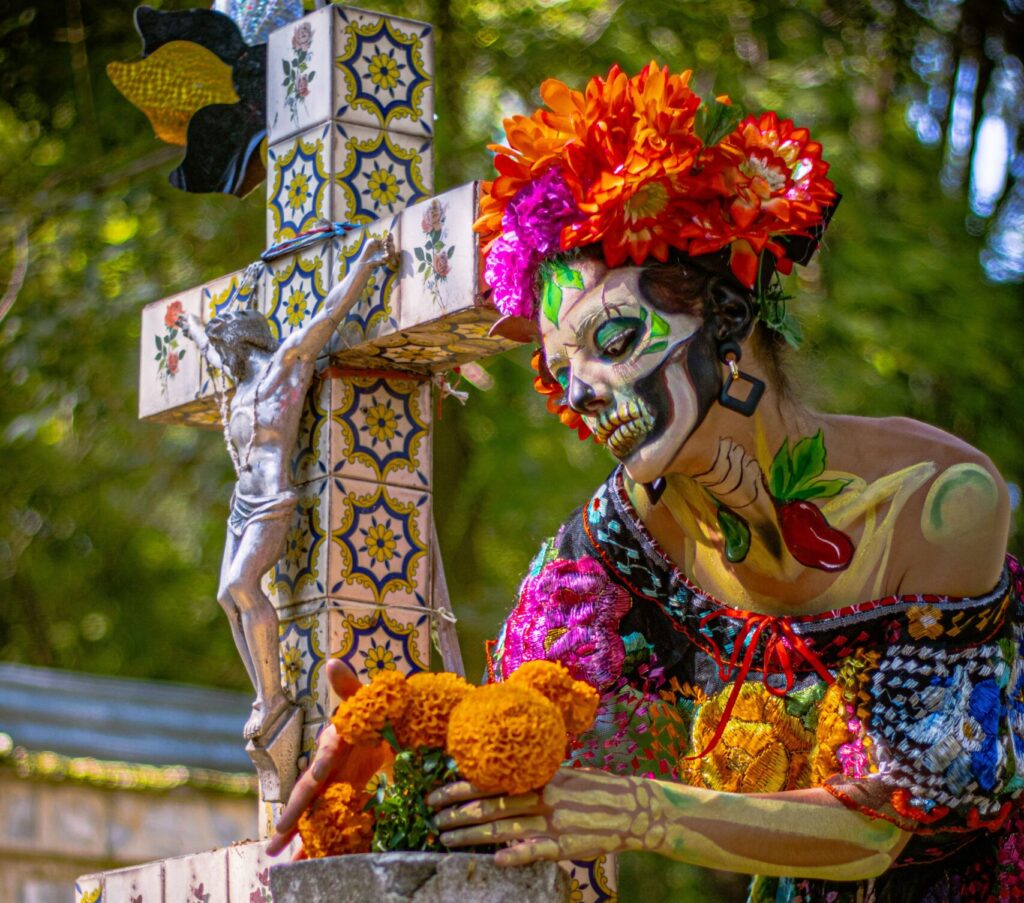
In the old tradition of Aztec culture, there were two kinds of worlds. Earth, and the vertical world composed of 13 sky and 9 underworlds. Fast forward to the contemporary festival which may seem very modern gothic in character because it includes the dead, and people painted like skeletons, dressed in vintage clothing like their ancestors. It has also become very commercial in many areas.
The Offerings/La Ofrenda
As a day to call back loved ones, the specific details can vary from region to region, but the basic elements based in nature remain the same.
The offering, or ofrenda is an altar you will see all over the place during this time. In addition, the streets are decorated with banners and nature based elements. This is my preferred part of the experience. The altars with the photos of the departed brings their relationship to life.
The family household altar will comprise of things specific to the departed members they are inviting back, such as photographs, jewellery, favourite sweets.
Elements of Nature
Here are some of the key nature elements represented: Earth, Wind, Water, and Fire
Earth is represented by flowers, specifically marigolds which give a beautiful scent.
Salt is protective and a purifier,
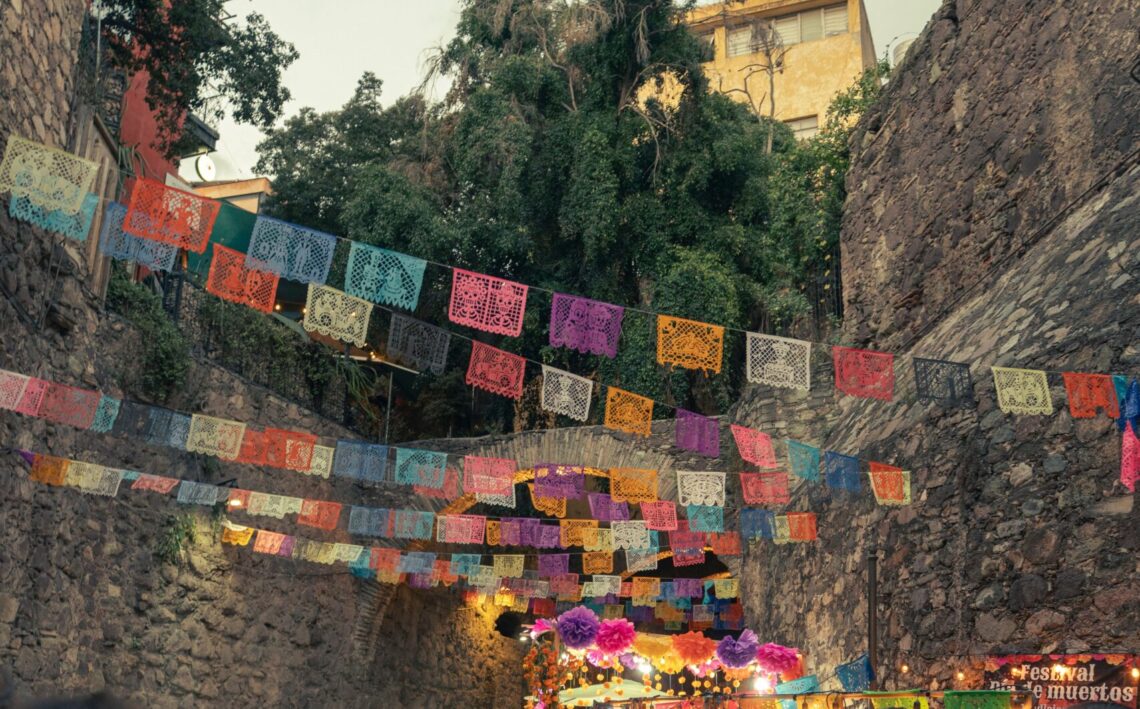
Wind – is in the fluttering of the paper flags or banners,
Water – glass of water, to help sustain the spirits on their journey to visit this world.
Fire – candles provide light to guide and
Copal – the scent to comfort and guide the sprirts. It is the signal that the visit is over, and is used to say goodbye to the departed as they return to their world.
There are many local variations to this list, so do your research if you feel this can add comfort to your life. Each culture has something to offer another. If the exchange is respectful and appreciative, then there is harmony. The commercialisation of El dia de los muertes can remove the sacred as time goes by, but it is up to the participants to hold true to the context.

Final Thoughts
The experience of the loss of someone close is different for everyone. The closer the relationship, the deeper the grief. If the pain is insurmountable and ongoing, professional help may be the way forward. The Day of the dead is an example of how one community makes time and space, once per year, to reintegrate the souls of their departed.
The Day of the Dead is one of the most joyous and comforting times for the participants in the community. With mariachi bands, dancing and processions, and a burst of colour. It provides communal and individual way to acknowledge the loss of loved ones. It is a day to remember and let go until the next year.
It is the legacy of Mesoamericans to Mexico, a way to preserve their traditions and bring them into the modern era. It continues to evolve with migration playing a key role is spreading the popularity of the day.
