
The Cheltenham Badlands: A Lesson in Slow Eco-Tourism
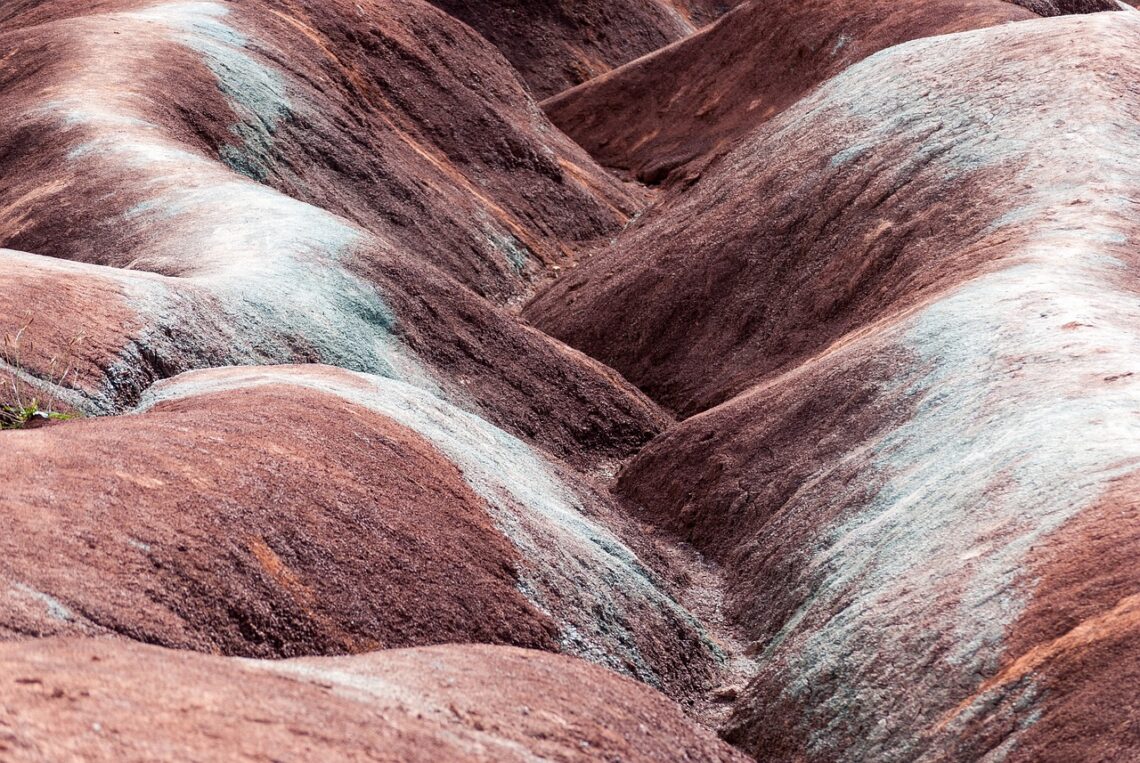
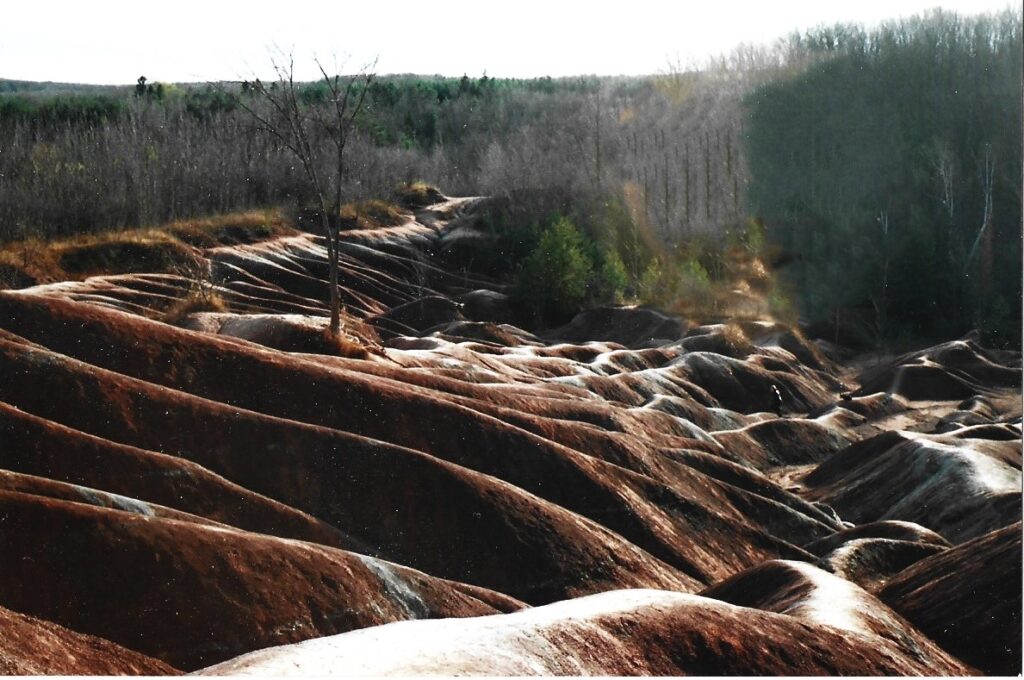
When you see the Cheltenham badlands for the first time, you know something bad happened. The eerie brown blood coloured mounds with teal blue streaks suddenly appear like a wound amid the green landscape.
It was quite startling to see this surreal gap surrounded by healthy trees the first time I drove past. I was taking a new route home, driving slowly down a narrow winding country road which needs your full attention. To my left, I saw it, like a parallel universe, a terrain like no other.
The last time I saw landscape like that was at bauxite mining operation in Jamaica. A surface crater, blood red in colour, looking like a surgical mess exposed, especially where water ran over it. The mineral extraction left an indelible mark.
Back in Canada, in Caledon, Ontario, a quaint country area, known for horse breeding. Cheltenham Badlands, begs the question – What happened here?
Background
The land was originally the traditional territory of the Mississaugas of the Credit, who maintained sustainable ecological practices while it was under their watch. With the influx of settlers from outside of North America, the indigenous nations were given few options when it came to signing over land and they had to accept the rapid change.
At that time in the 1800s, Government land allotted to settlers had to be cleared of trees. This was the beginning of the end for the Cheltenham farmlands. Unfortunately, it was the trees that had been keeping the delicate soil composed of Queenston Shale together, and their removal caused the unusual ridge and gullies to form.
What lay beneath the dismantled forest was a sea bed that scientists say is over 445 million years old. Not only could it never be used as agricultural farmland, the erosion increased. The smooth compact, Queenston Shale is clay rich and soft. In addition, it stretches from this region all the way to New York state as is part of the Niagara Escarpment.
Enter the Tourists
Locals were always aware of this fascinating spot, it was a place for families to spend interesting weekends. I admit I was part of the problem. But you don’t know, until you know.
As urban sprawl forces city dwellers to go further afield to get their nature fix, Cheltenham Badlands is experiencing a second ecologically sensitive wave as it becomes a more popular tourist destination. The location is not conducive to motorised tourist traffic, as it is located on a narrow downhill rustic road.

Like many tourist hotspots around the world, the Cheltenham Badlands became the victim of its own success. The solution used here is one employed by the another ancient site in Peru, the use of a viewing platform.
The viewing platform and boardwalk makes Cheltenham Badlands ecotourism more sustainable, and even accessible in an unusual way.
Previous to the platform, people were free to roam at will across the barren landscape. I enjoyed walking the packed earth myself amazed the unusual formation. Education is always a key to such places. The Heritage authority which now runs the site, posts detailed information about the site.
Many Facebook and Instagram moments were captured here, as well as backdrops for other worldly landscapes in movies.
To try and alleviate the traffic problems caused, the Heritage authority has provided a paid monitored parking lot.
The problem is most people are not booking in advance and this causes a long back up as they turn cars without reservations away in the high season. Last minute bookings by phone may not be possible while in the area as cell service can be fickle.
It is really an interesting sight to see, and I did benefit from the scene as a cautionary tale, when I visited as a local. Now I can only think of the Joni Mitchell song, Yellow Taxi.
Don’t it always seem to go
That you don’t know what you’ve got ’til it’s gone
They paved paradise, put up a parking lot – Joni Mitchell
Perhaps one day an enterprising farmer will set up a parking spot with a shuttle bus to the site, as you can only pay for 90 minutes or 3 hours slots at this time. Prices also depend on the day the week.
If you do plan to go weekdays are cheaper. You can contact the Ontario Heritage Trust

