
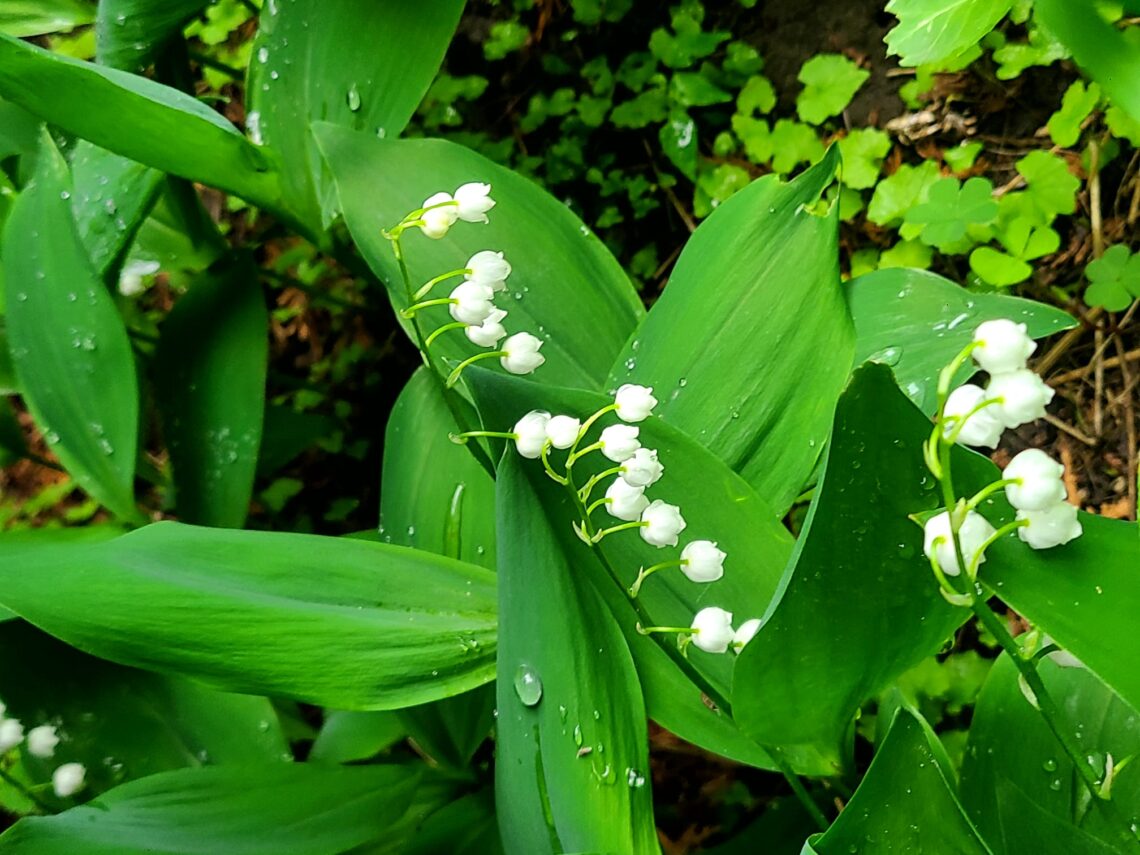
Lily of the Valley: Beauty and Risks in Your Garden
It smells so sweet, Le muguet in french, known to us as lily of the valley (Convallaria majalis). However, don’t let those petite delicate, bell shaped flowers fool you, or its scent mesmerise you. Once lily of the valley moves in, it will take over and be very hard to remove from your garden. Lily really does belong in a valley, far from enclosed gardens, or even wooded areas.
Table of Contents
Ancient use
Long ago, in Europe and Asia, this plant symbolised the old ways, representing fertility, and agricultural rebirth in Spring. The Romans used it for healing purposes, in oils and baths.
The famous Pliny the Elder, said it was good for vapours the heart. In modern times, John Lust, author of The Herb Book, tells us that the lily of the valley can be made into an ointment for rheumatic or gout pains, but should only be used under the supervision of qualified practitioner. And, the Christian brethren of medieval times declared it was a good example of modesty and humility as its flowers hung down.
It is a favourite in spring bridal bouquets as they are thought to bring good luck. They do produce red berries at the end of the season, but there has to be two separate colonies cross pollinating for this to happen.
Toxic
For all these wonderful features, lily of the valley is totally toxic, and that is the reason it is pest resistant and has free reign over the garden. It is tough and strong, and will strangle everything in its path. If you must place it in your garden, I recommend planting it in anything but the ground.
If you do want to risk lily of the valley in the garden, then you need a physical barrier, like wood or metal, at least six inches deep, to stop the rhizomes escaping.
Eviction Notice
The bailiffs have tried several times to evict the lily of the valley. It was already in the garden when I moved to this house. The first year, I as ambitious and tore out the two inch thick carpet the lily of the valley that had formed in the garden bed. This was difficult as I have a companion planted bed, which includes tulips, roses and hostas.
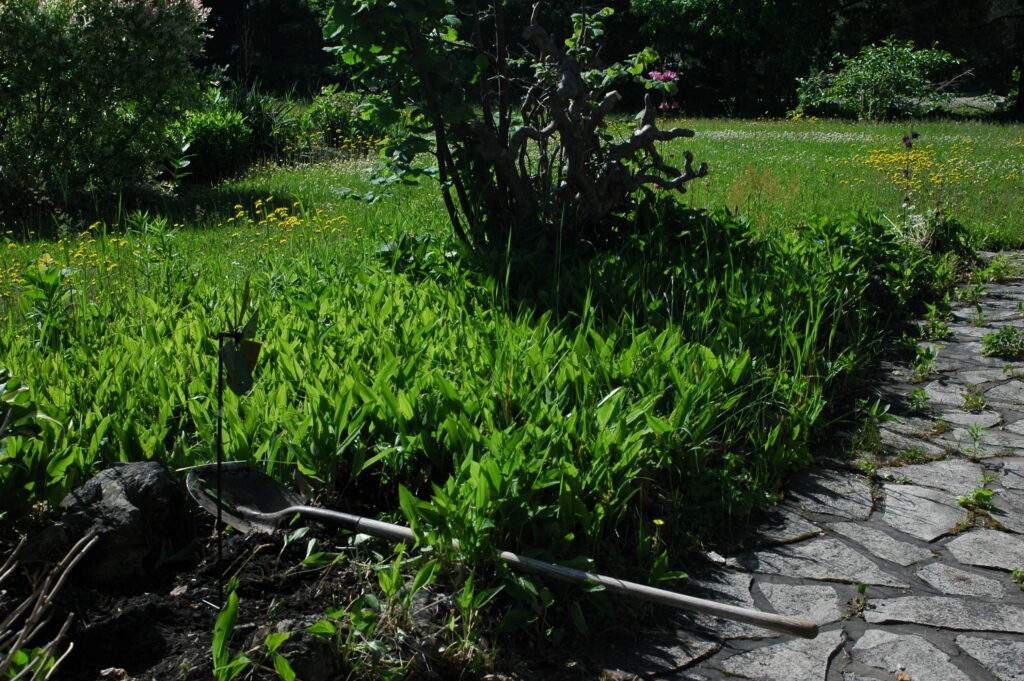
Things looked good for the first for two years, then in the third year slender leaves started rearing their heads. I have thought of blasting them with fire, but this might be overkill.
My lily of the valley came in late this year. The patch in the shade garden has tripled, and if that was not bad enough, there are single shoots heading towards the lawn. Mission impossible? I moved quickly to remove them. The survival of the rest of the garden is at stake.
Tools for Removal
This is not a quick fix and will require patience, as seasoned gardeners discover while grooming their enchanted gardens. I have found some amazing tools that are very useful for removing lily of the valley.
I love my Japanese Hand Weeding Sickle. It is sharp, small enough to get up and close to weeds around other plants. The angle is perfect for weeding, as you can rake, cut and pull the weeds. It is a very precise tool.
I use my long handled pointed spade to dig deep and turn over the thick matted carpet, which I can then pull out of the garden. By alternating from up close and personal with the weeding sickle, to standing tall and digging, the body gets to flex in a new position.
Garden waste bags are necessary if you want to keep your garden clear of lily’s return. Do not dump this plant in the waste or in the compost, as it will thrive there. Most municipalities allow you to dump weeds and garden waste as long as it is placed in waste bags.
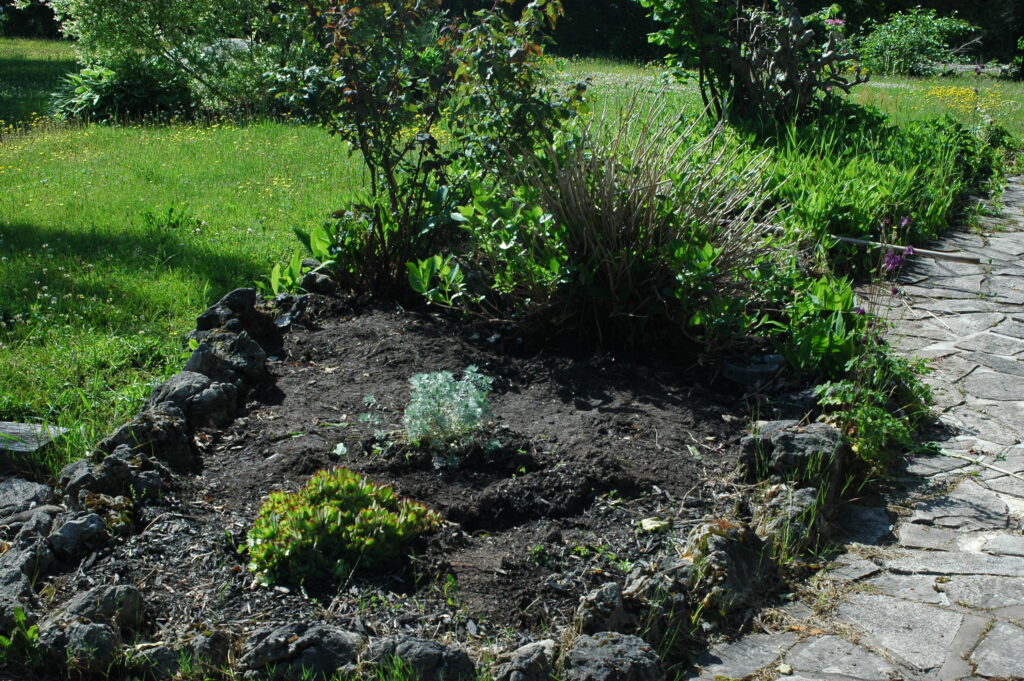
In the photos, you can see the work that went into clearing. In the past, I buried the bed under heavy cardboard, but this organic source formed an alliance with lily to lay low for a few years until it had enough strength to rise again like the phoenix.
Under cover
This year, the area that has been cleared of Lily will be covered with landscape fabric for two years. Just to be sure that any escapees would be controlled. The area will be covered with flower pots and garden decorations. This will be a great spot to experiment with garden design, as you will be able to move things around.
Another method used by master gardeners, which I have not tried, is solarisation. This requires a clear plastic tarp to be placed over the plants, and sealed so no air gets in as they are emerging. The idea is to suffocate them right down to the root. I personally prefer to dig them out and then cover the area, which does require more physical labour but is probably the best way to guarantee success.
Final Thoughts
No one said it is easy. It requires patience, focus, and energy to remove this symbol of purity and innocence when it invades your garden. One plant cannot have dominion over all others in the garden. This is an exercise in restoring harmony to the garden. Just as we wish to have harmony in our own lives, this is a lesson in removing that which does not serve us, and stifles our growth.
Lily of the valley is beautiful, with flowers and fragrance from May to early June, but it is best kept in pots and containers in the garden.
Do you have a tried and true method for removing lily of the valley from the garden? Please share in the comments below.

