
Shamrocks: Symbol of the Emerald Isle and How to Grow them
If St. Patrick, the Patron St of Ireland were alive today, he would be proud that the symbol he used to explain the holy trinity, according to legend, is still going strong. Right up there with the flowing Guinness and the smiling Irish eyes, The shamrock is synonymous with everything Irish.
I went to a school that was 90% Irish catholic. St. Patrick’s Day was always celebrated with great fervour, including hymns to the saint. In addition, all the students were given a piece of shamrock plant. It was fluffy and the leaves were so small. It looked very different from the single leaf that was always portrayed.
The Real Shamrock
So which plant is the real shamrock? We can start with the clover, although the North American version is a different unrelated plant again. Hold on to your seats as I share what I discovered about the Shamrock.
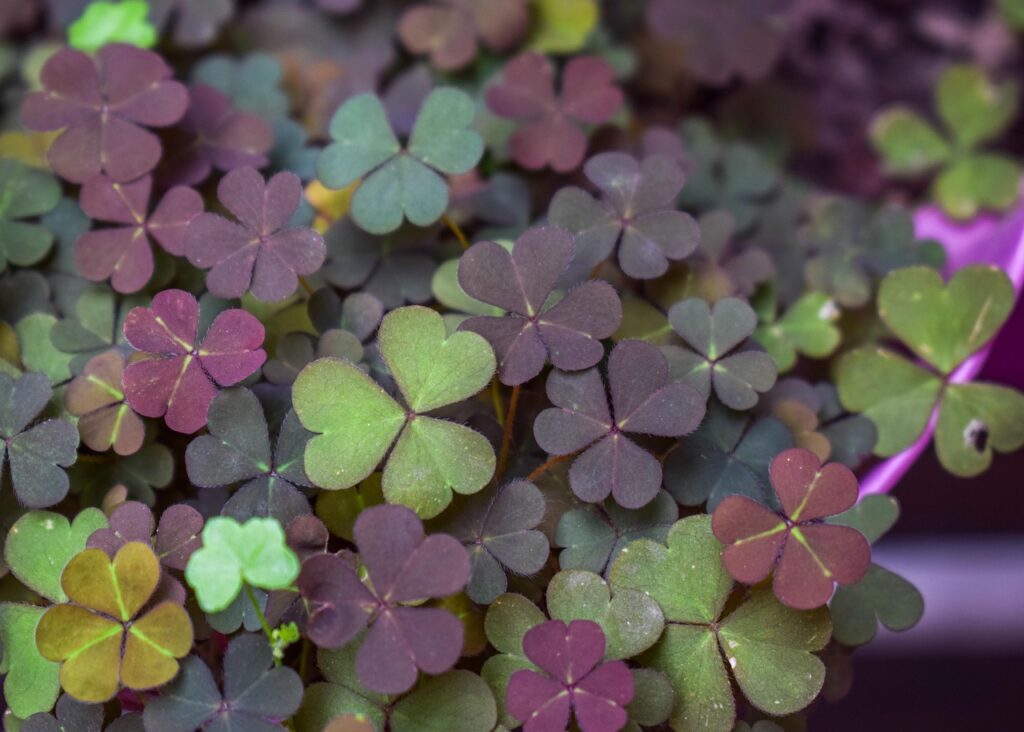
There are actually several of variations of shamrock. The Irish Celt word for shamrock is actually a clue: seamair óg, which means young clover.
A deeper look at the shamrock reveals an older pagan reverence for this plant long before St. Patrick reached the shores of Ireland.
The Druids held it in high esteem because it represented the power of three, a sacred number in esoteric beliefs. The shamrock was associated with the power to overcome evil, and bring good luck.
There has been much debate about the true shamrock, as every county in Ireland would have their own version. Back in 1831, while everybody was celebrating St Patrick’s Day, the English botanist, James Ebenezer Bicheno, presented his research on the identity of the true shamrock to the Linnean Society. He believed that the Trifolium (white clover), was not the true shamrock, but it was the Oxalis acetosella, one of the wood sorrels.
Bicheno pointed out that none of the trefoils were not originally abundant in Ireland, and were not ancient plants. They were introduced much later.
The custom of wearing the shamrock is said to date back to the fifteenth century. By the 1800s, shamrocks were the brand for all things Irish.
It was the department of agriculture in Ireland that decided to officially nominate a species to be the recognised shamrock that could be issued commercial licences for export. The chosen one was the Trifolium dubium, commonly known as Yellow clover.
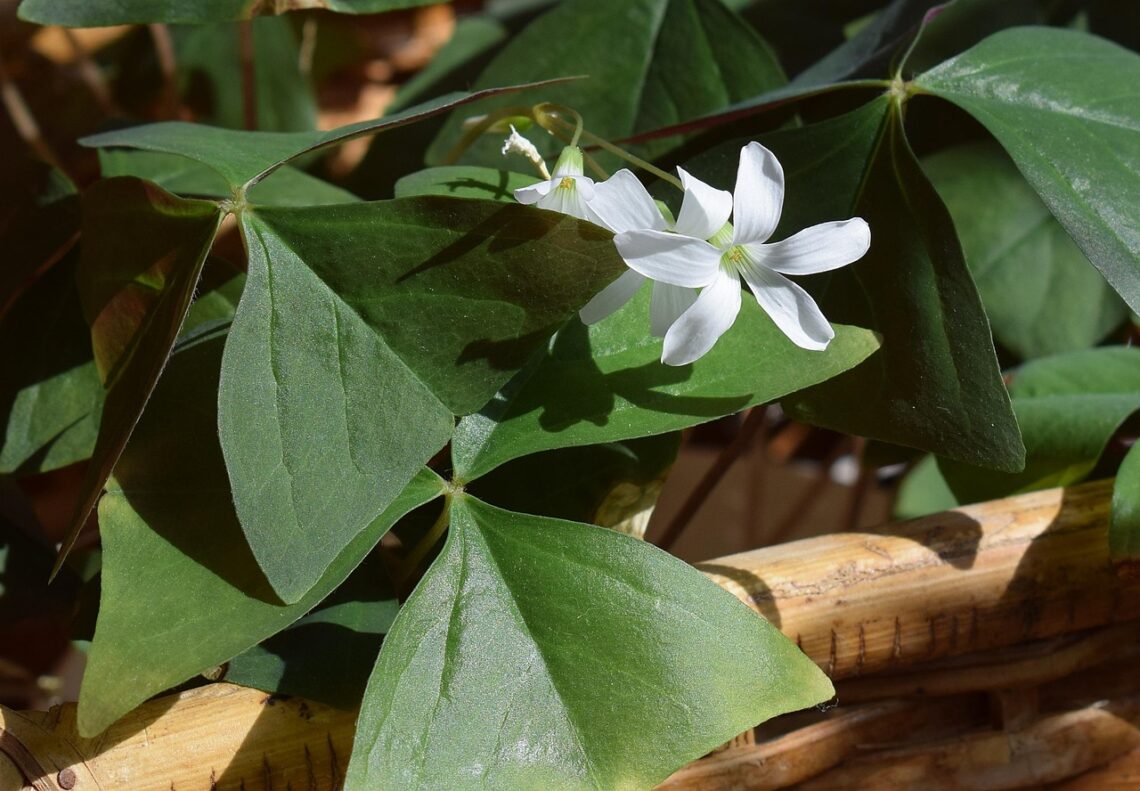
Here in North America, the household plant sold and promoted on St. Patrick’s Day as the Shamrock representative is the Oxalis triangularis (formerly called O. regnellii), a member of the wood sorrel family.


Native to the Americas and Africa, the oxalis is a popular indoor plant sold and readily available in stores around St. Patrick’s Day. It is also known as the false shamrock.
They Oxalis surprisingly easy to grow as I found out when I found in few strands in sharing a pot with a gifted leaf of life plant. I carefully replanted them in another pot, and they went wild.
There are many shades of oxalis ranging from purple, green and red. The leaves are nyctinastic, which means they fold in low light.
Oxalis grows from corms/ tubers
Temperature: Prefers cooler temperatures
Light: Likes Bright light, and the leaves will move towards direct light sources.
Soil: Should be well drained, and a gritty, sandy mix is good or add perlite to potting soil for added drainage. Moist but not soaking soil.
Oxalis prefers to be pot bound as it has a shallow root system. An added bonus of this plant is that it does not attract the usual plant pests.
Fertilise only when they are actively growing, with diluted fertiliser once every 3 weeks.
Don’t make the mistake of throwing out the plant when it seems to die off in the fall. It is only going into its dormant period.
Store the pots in a dark, cool place. When the new growth returns, return the plant to a bright spot and watch it start to bloom all over again.
